
Loading…
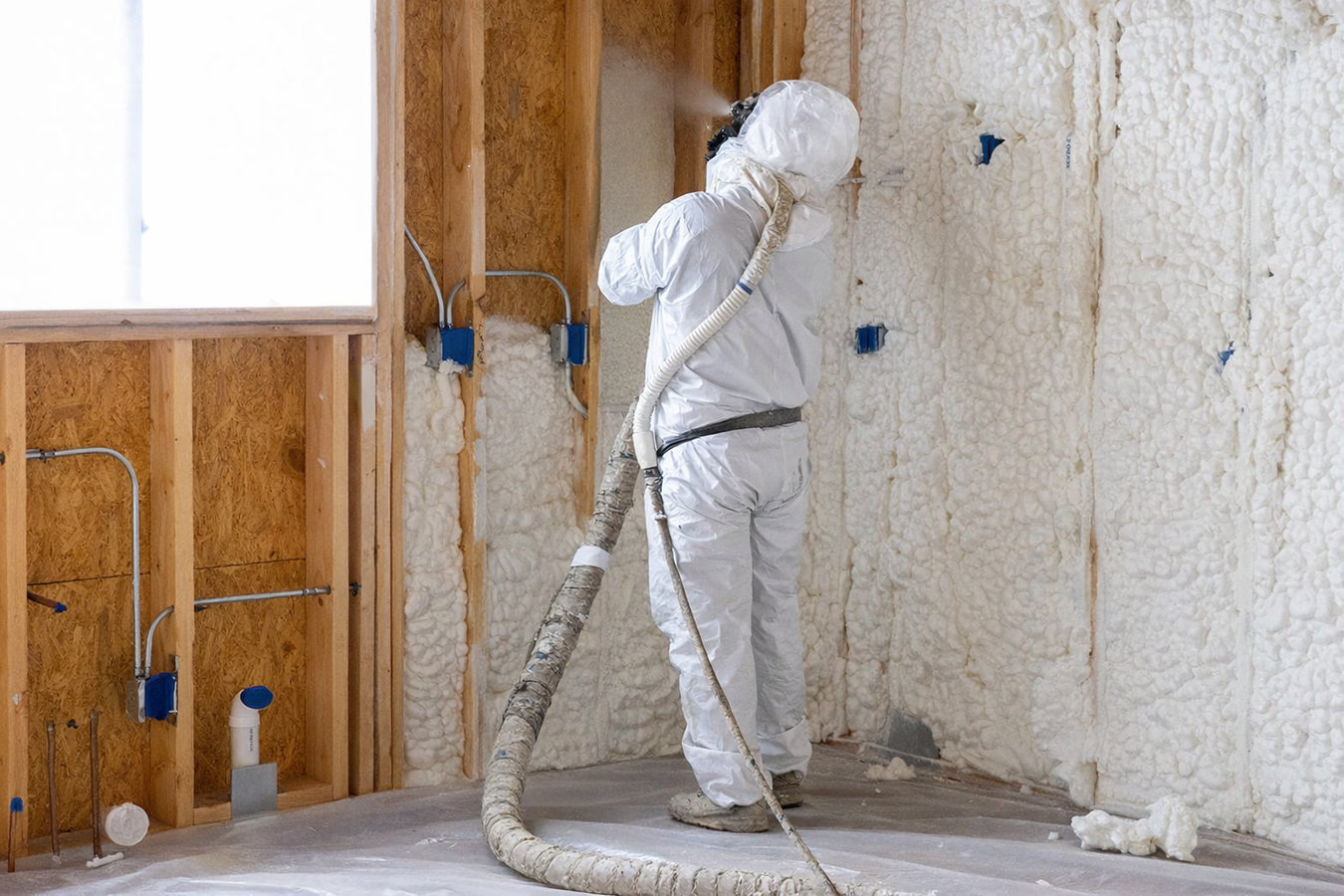
Bismarck Insulation brings spray foam, attic insulation, and basement insulation to Williston, ND - a Williams County contractor who knows the oil-boom housing stock, the open-plain winters that push frost six feet down, and responds within 1 business day.
Williston sits on flat, open land near the Montana border with few natural windbreaks, meaning cold air hits homes from every direction in winter. Rim joists - the band of framing where the basement wall meets the floor system - are uninsulated in most Williston homes built before 2000, and even some built during the boom years were rushed past this detail. Our spray foam insulation service applies closed-cell foam to rim joists, crawl spaces, and attic knee walls, expanding on contact to seal every gap and delivering the highest R-value per inch available for Williston's demanding climate zone.
Ice dams are a recurring problem on Williston rooftops because the city averages around 40 inches of snow per year and sees prolonged stretches well below zero. When an attic is under-insulated, heat escaping from the living space warms the roof deck, melts the bottom layer of snow, and the water refreezes at the cold eaves - forcing water under shingles. Homes near downtown Williston that date to the early 1900s, and boom-era homes on the newer subdivisions, both commonly need attic depth brought up to the level that prevents this cycle.
Williston's frost depth can reach five to six feet underground, making full basements standard across the city's housing stock. Those basements are a primary path for heat loss when rim joists and foundation walls go uninsulated, which is common in both the older downtown homes and many of the rental and workforce units built during the oil boom. Insulating basement rim joists and walls reduces cold floors in the living space above and significantly cuts pipe-freeze risk during Williston's hardest winter weeks.
Open prairie surrounds Williston on all sides, and winter winds regularly sustain speeds that drive cold air through gaps around outlets, plumbing penetrations, and framing - gaps that are invisible from inside the house but measurable on a heating bill. In oil-boom homes built quickly between 2005 and 2015, air barrier details were sometimes skipped under schedule pressure, making those homes noticeably drafty even when they look new. Sealing these penetrations before adding insulation captures the full benefit of both steps, because insulation alone cannot stop moving air.
Blown-in insulation is the most practical upgrade for Williston homeowners who want more attic coverage without tearing into finished ceilings or walls. The material is installed through an attic access point, distributed evenly across the entire attic floor, and fills around existing framing and obstructions that batt insulation cannot reach. For the ranch-style and two-story homes that make up Williston's residential stock - from the older downtown blocks to the newer west-side subdivisions - blown-in is the fastest way to reach the attic depth that stops ice dams from forming.
Williston is the county seat of Williams County and the largest city in far northwestern North Dakota, sitting just east of the Montana border in the Williston Basin. The city had around 27,000 residents as of the 2020 Census - a number that roughly doubled during the Bakken oil boom of the 2000s and early 2010s when Williston grew faster than almost any city in the country. That rapid growth means a large share of the current housing stock was built between 2005 and 2015 under intense schedule pressure. When homes go up fast to meet a surging population, details like attic air sealing, rim joist insulation, and proper vapor barrier installation can be missed. Those shortcuts tend to show up as high heating bills and ice dams within the first few winters.
The climate here makes those gaps costly. Williston averages lows well below zero in January and February, with frost pushing five to six feet underground during hard winters. The open, flat land around the city provides no natural windbreak - sustained winds in winter drive cold air into every small gap in the building envelope. Older homes near downtown, some dating to the early 1900s when Williston was founded as a railroad town, have a different set of needs: original wood framing, aging foundations, and insulation that has settled over decades. Whether a Williston home is a century-old two-story near the historic core or a vinyl-sided ranch on a west-side subdivision, the climate demands more insulation than most of these properties currently have.
Insulation projects in Williston split into two categories depending on when the home was built. In the older neighborhoods near downtown - where homes from the 1910s through 1950s sit on narrower lots with mature trees - the typical job involves addressing settled or deteriorated original insulation and sealing air infiltration paths that were never part of the original build. In the boom-era subdivisions on the west and south sides of the city, the issues are more often incomplete insulation details: rim joists that were never foamed, attic hatch areas that were never sealed, or vapor barrier installation that was done incorrectly. For any project that requires a permit, we pull it through the City of Williston Building Department.
Williston has a distinct geographic character. The city sits near the confluence of the Missouri and Yellowstone Rivers - a landmark that gives the area its identity as a river city at the edge of the Great Plains. The Fort Buford State Historic Site, where Sitting Bull surrendered in 1881, sits just outside of town. The Williston Basin International Airport serves the region and grew substantially during the boom years to handle the surge in workers and business travel. We work across all parts of Williston, from the river-bottom properties to the hilltop neighborhoods above the city.
We also serve communities south and east of Williston. Homeowners in Dickinson can count on the same crew and the same process. And Minot - the regional hub to the east along US-2 - is also within our regular service range.
Reach us by phone or through the contact form and we respond within 1 business day. You do not need to know what type of insulation you need - tell us what you are experiencing: high heating bills, ice dams on the roofline, cold rooms near exterior walls, or drafts around outlets and windows.
We visit your Williston property and inspect the attic, basement rim joists, crawl space, and any areas you have flagged. You receive a written estimate with the full cost before any work is scheduled - no verbal quotes and no surprise charges on the invoice.
If your project requires a permit through the City of Williston Building Department, we handle the application before the crew arrives. Most residential jobs in Williston can be scheduled within one to two weeks of estimate approval. Spray foam jobs require you to stay out of the treated area for at least 24 hours - we confirm the re-entry timeline in writing.
The crew arrives on schedule, protects the work area, and finishes the installation. Most Williston residential projects are complete in one to two days. Before we leave, we walk you through what was installed and where, and provide any documentation needed for federal energy efficiency tax credits.
We cover all of Williston and Williams County - from older downtown homes to boom-era west-side subdivisions. Free estimates, written quotes, and responses within 1 business day.
(701) 299-5341Williston is the county seat of Williams County and the largest city in far northwestern North Dakota, with a population of around 27,000 as of the 2020 Census. The city sits in the Williston Basin near the confluence of the Missouri and Yellowstone Rivers, just east of the Montana state line. Williston was originally a railroad town, and its downtown core still has homes and commercial buildings from the early 1900s. The Bakken oil boom transformed the city beginning in the mid-2000s, roughly doubling the population within a decade and pushing thousands of new homes, apartments, and rental units out onto the prairie on the city's west and south sides.
The result is a city with two distinct housing eras side by side: the older, denser neighborhoods near downtown where homes from the 1910s through 1950s sit on established lots, and the newer subdivisions where vinyl-sided homes built from 2005 to 2015 line up on flat, open streets with few trees. Both eras have insulation challenges - the old homes through settling and age, the boom-era homes through the rushed construction timelines of a boom. To the east along the US-2 corridor, Minot is the next regional hub, and we serve homeowners there as well. To the south, Dickinson is within our regular service range.
Spray foam insulation creates an airtight seal that dramatically improves energy efficiency.
Learn more →Proper attic insulation keeps your home comfortable and prevents costly heat loss.
Learn more →Blown-in insulation fills gaps and voids for complete, even coverage throughout your home.
Learn more →Whole-home insulation solutions tailored to keep every room comfortable year-round.
Learn more →Safe and efficient removal of old or damaged insulation before new installation.
Learn more →Crawl space insulation protects your floors from cold and moisture intrusion.
Learn more →Wall insulation reduces heat transfer and improves soundproofing between rooms.
Learn more →Air sealing eliminates drafts and energy leaks at gaps, cracks, and penetrations.
Learn more →Basement insulation reduces heat loss and helps prevent moisture and condensation.
Learn more →Closed-cell foam offers the highest R-value per inch and a strong moisture barrier.
Learn more →Open-cell foam provides excellent sound dampening and cost-effective air sealing.
Learn more →Attic air sealing stops conditioned air from escaping through the top of your home.
Learn more →Vapor barriers protect your crawl space from moisture damage and mold growth.
Learn more →Professional vapor barrier installation keeps humidity and moisture out of your home.
Learn more →Retrofit insulation upgrades existing homes without major renovation or disruption.
Learn more →Commercial insulation solutions for offices, warehouses, and industrial facilities.
Learn more →Serving these cities and communities.
If your Williston home was built during the oil boom years - or if it is an older downtown property that has never had an insulation update - every cold season is costing more than it should. Call or message us and we respond within 1 business day.