
Loading…
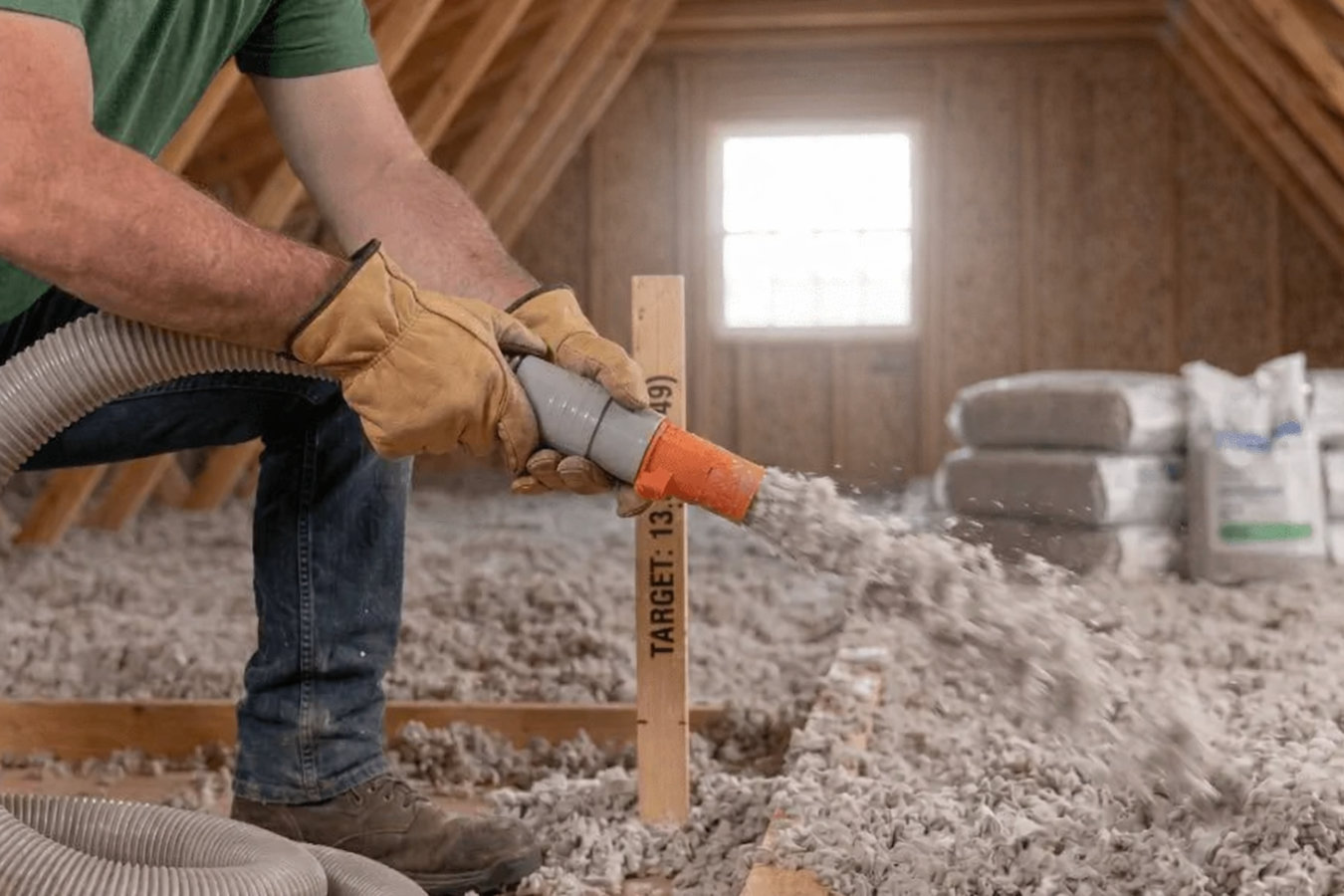
Thin attic insulation is one of the main reasons Bismarck homes overspend on heat every winter. Blown-in insulation fills every gap and corner that batts miss, so your furnace can finally keep up on the coldest nights.
Blown-in insulation in Bismarck fills attic floors and wall cavities with loose fiberglass or cellulose insulation - most attic jobs are completed in a single day, often in just a few hours, and you do not need to leave the house while the work is done.
Bismarck sits in one of the coldest climate zones in the continental United States, and homes built here before the 1990s were insulated to standards that fall well short of what is needed for a North Dakota winter. If your home is in that age range, there is a reasonable chance your attic has thin or settled material - and your heating bills are reflecting it. Blown-in insulation covers the entire attic floor evenly, including the irregular spaces and corners that rigid batts simply cannot reach.
If your attic also has gaps around pipes, wires, and light fixtures, pairing blown-in insulation with attic insulation and air sealing is the combination that produces the biggest improvement in comfort and energy costs.
If your gas or electric bill spikes every December and January without any change in habits, heat escaping through the attic is one of the most common causes. In Bismarck's climate, a poorly insulated attic can account for a significant share of total heat loss, because warm air rises and exits through the ceiling before your furnace can keep up.
Ice dams - the ridges of ice that build up along your roofline after a snowfall - are a direct sign that heat is escaping through your attic, warming the roof, and melting snow unevenly. When that meltwater refreezes at the cold eaves, it can back up under shingles and cause water damage inside. Bismarck homeowners who see ice dams regularly should treat it as a signal to check the attic.
If a bedroom or living area stays noticeably colder than the rest of the house during a Bismarck winter, the insulation above or around that room may be thin, missing, or settled. This is especially common in rooms directly under the roof or above an unheated garage. The fix is often simpler than homeowners expect.
Bismarck homes from the postwar decades - the 1950s through the 1980s - were insulated to standards that are now well below what is recommended for this climate. If you have lived in your home for years without any insulation work, there is a real chance the attic is under-performing. A quick look with a flashlight tells you a lot: if you can see the wooden joists clearly, coverage is too thin.
We install blown-in insulation in attics, open wall cavities, and existing walls using dense-pack methods. Our attic work starts with sealing air leaks around penetrations before any material goes in - that combination is what separates a thorough job from one that looks complete but still lets warm air escape. For homes where the attic is only part of the problem, we connect the blown-in work to a broader home insulation assessment that covers the basement rim joists, crawl space, and walls in a single visit.
For existing walls in older Bismarck homes, we use a dense-pack approach - drilling small holes through the siding or drywall, blowing material into the cavity under pressure, and patching the holes afterward. It is far less disruptive than it sounds and makes a significant difference in wall-adjacent rooms that stay cold in winter. If your attic also has air-sealing needs beyond what blown-in covers, attic insulation can be scheduled at the same time to handle those gaps in one crew visit.
Best for homeowners who need to bring their attic up to recommended depth quickly and affordably, with minimal disruption.
Suited for older homes with empty or under-filled wall cavities where adding insulation without removing drywall is the priority.
A moisture-resistant option that holds its loft well over time - a reliable choice for Bismarck attics with good ventilation.
Made from recycled paper treated for fire and pest resistance, cellulose fills irregular spaces densely and is well-suited to tightly framed cavities.
Bismarck's heating season runs from roughly October through April - more than half the year - with January lows that regularly hit -5 degrees F or colder. Federal energy guidelines recommend significantly more attic insulation for homes in this climate zone than for homes in milder parts of the country, often nearly double what you would need in a mid-Atlantic or Southern state. Many Bismarck homes built between the 1950s and 1980s have original insulation that has settled and degraded, or was never adequate to begin with. The practical window for scheduling attic work before the heating season closes is late summer and early fall - demand spikes in October when temperatures drop and appointment slots become harder to find - the same timing applies to any home weighing blown in insulation for the first time.
Homeowners near Mandan and Washburn face the same cold-climate insulation challenges and housing-stock age profile as Bismarck proper. Older ranch and split-level homes throughout this region share similar attic layouts - low-pitch roofs, shallow eave areas, and framing from an era when insulation depth was an afterthought. Blown-in material adapts well to all of these conditions and can be added without any structural changes to the home.
We ask a few quick questions - the age of your home, what problems you have noticed, and whether you have had any insulation work done before. We schedule a free in-home visit from there. Most inquiries get a response within 1 business day.
A contractor goes into your attic, measures the existing insulation depth, checks for air leaks around penetrations, and looks for moisture issues or old materials that need attention first. This visit is your chance to ask questions - we walk you through what we find before you commit to anything.
After the assessment you receive a written quote that spells out the scope, the type and amount of material, whether air sealing is included, and the total cost. Compare quotes if you are getting more than one - make sure they are comparing the same scope of work.
The crew sets up outside or in the garage, seals air gaps first, then runs the hose into the attic and blows material to the agreed depth. A standard attic typically takes two to five hours. Before leaving, the crew measures depth in multiple spots and shows you the results.
We will measure what is up there, tell you exactly what your home needs, and give you a written quote. No obligation, no pressure - just an honest assessment from an experienced North Dakota crew.
(701) 299-5341We seal penetrations before blowing in any material - this is the step many contractors skip. Air sealing is what actually stops heat from escaping through gaps around pipes, wires, and fixtures. Skipping it is the most common reason homeowners do not see the savings they expected.
We send experienced local crews to every attic in Bismarck and document the work from start to finish. You get a free written estimate and a clear scope up front, and we walk you through exactly what was installed when the job is done.
A properly done blown-in job reaches the depth specified in your quote - no thin spots near the eaves, no gaps around fixtures. Before the crew packs up, they measure in multiple locations and show you the numbers. You should not have to guess whether you got what you paid for.
Montana-Dakota Utilities has offered rebates to Bismarck homeowners who upgrade their insulation. A contractor who does this work regularly in the Bismarck area knows the MDU process and can help you with the documentation you need to claim it. We have helped homeowners navigate that process before.
The combination of proper air sealing, correct material depth, and clear documentation sets a professional blown-in job apart from a basic one. The North American Insulation Manufacturers Association sets the industry standards we follow - and you can hold us to them.
For current federal tax credit details, see ENERGY STAR - Federal Tax Credits for Energy Efficiency. For insulation depth recommendations for Bismarck's climate, visit the U.S. Department of Energy's insulation guide.
A whole-home insulation assessment covering the attic, basement rim joists, crawl space, and walls in a single visit.
Learn more →Targeted attic upgrades combining air sealing and insulation to address the primary source of heat loss in most homes.
Learn more →Appointment slots fill up fast once October hits and heating season starts. Call or send a message today and we will get you scheduled while there is still time to prepare.