
Loading…
Bismarck Insulation serves Aberdeen, SD homeowners with blown-in insulation, spray foam, and basement insulation - a contractor who understands northeastern South Dakota's pre-1960 housing stock, full-basement construction, and winters that push frost 48 to 60 inches deep, responding within 1 business day.
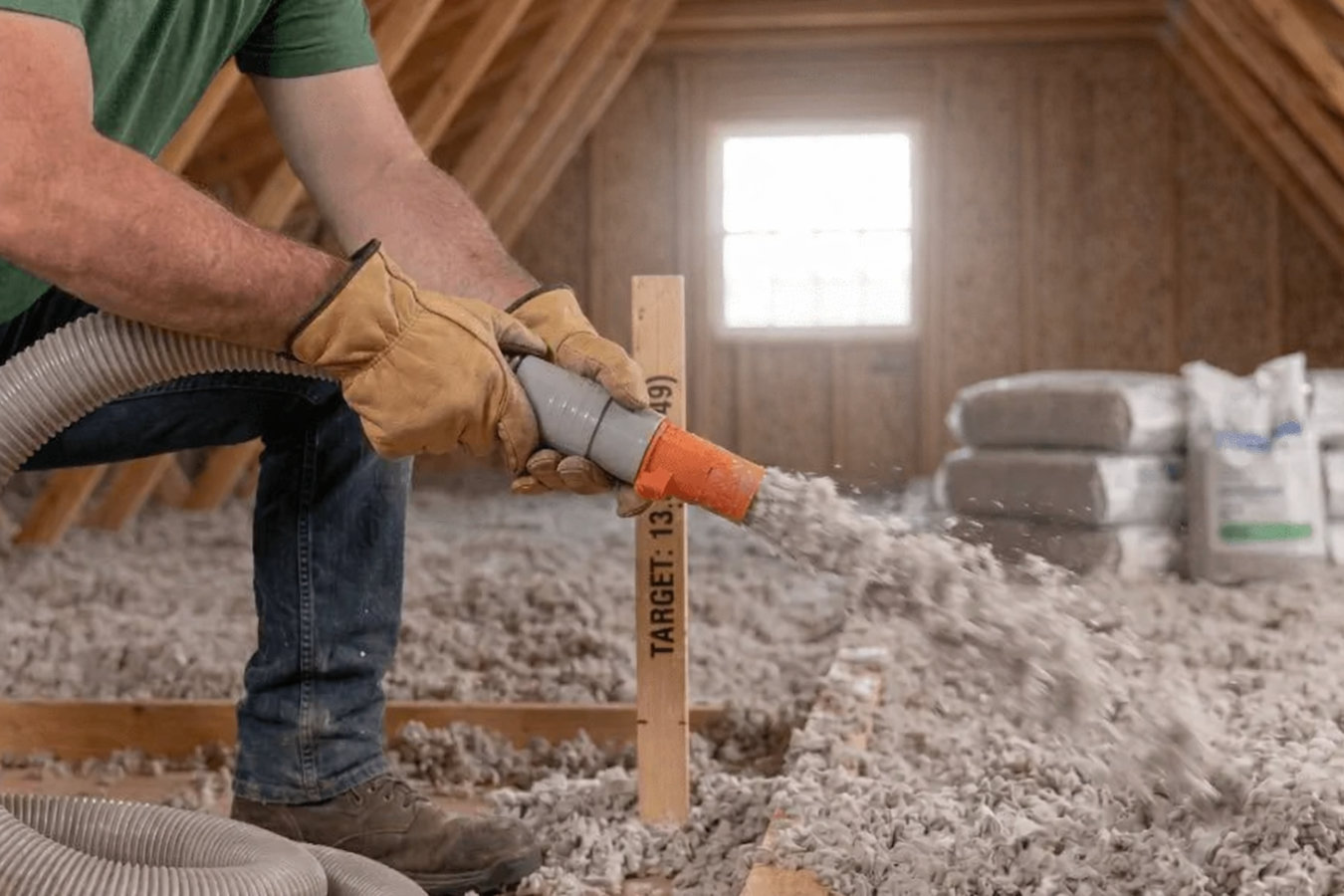
Aberdeen has a large share of homes built before 1960, and the original insulation in those attics has been settling and degrading for decades - often down to a fraction of the depth that South Dakota's frost climate actually requires. Blown-in insulation is the most practical solution for these older two-story foursquare and bungalow homes because it can be added through an attic access point without opening ceilings or finished walls. Our blown-in insulation service distributes material evenly across the entire attic floor, filling around framing and obstructions that batt insulation cannot reach, and bringing attic depth up to the level that stops ice dams and cuts heating costs.
Nearly every home in Aberdeen is built on a full basement because the frost depth here reaches 48 to 60 inches - a slab foundation would heave within a few winters. Those basements are a major source of heat loss when rim joists and walls are uninsulated, which is the norm in Aberdeen's pre-1960 housing stock. Aberdeen's flat glacial lake bed terrain also means spring snowmelt and heavy rain sit against foundation walls longer than in cities with more slope, making a properly insulated and sealed basement wall doubly important for moisture control.
Ice dams are a familiar seasonal problem for Aberdeen homeowners, and the root cause in almost every case is the same: heat escaping through a poorly insulated attic warms the roof and melts snow, which then refreezes at the cold eaves. Aberdeen averages around 40 inches of snow per year with January temperatures that regularly drop below zero. Bringing attic insulation depth up to the level appropriate for South Dakota's climate zone - and sealing air penetrations at the same time - is the most effective way to end the ice dam cycle without climbing up on the roof every winter.
Aberdeen's older wood-frame homes have rim joists - the band of framing at the top of the basement wall - that were never insulated during original construction and are a direct path for cold outside air to enter the floor system above. Spray foam applied to these rim joists expands on contact to seal every gap around pipes, wires, and framing in a single step, delivering both air sealing and insulation where batt material alone cannot keep up. For Aberdeen homes with crawl spaces or unfinished attic knee walls, spray foam is also the most durable choice against the repeated freeze-thaw cycles the city sees every year.
Aberdeen homes built in the 1910s through 1940s predate modern air-barrier construction standards by several decades, and gaps around plumbing vents, electrical boxes, and the tops of interior partition walls are common in these older structures. Those gaps let conditioned air out in winter and pull in cold outside air, which undermines even a well-insulated attic. Air sealing these penetrations before adding blown-in material is critical in Aberdeen's older housing stock - adding insulation on top of a leaky air boundary captures only a fraction of the available energy savings.
Aberdeen is the third-largest city in South Dakota, with a population of around 28,000 and a role as the regional hub for northeastern South Dakota. The housing stock here is older than in most comparably sized Midwestern cities - a significant share of homes were built before 1960, with many going back to the 1910s through 1940s. These are two-story foursquare and craftsman bungalow homes built for durability, with full basements standard because the frost depth in this part of South Dakota runs 48 to 60 inches. The insulation in those homes was installed when code requirements were far below what the climate actually demands, and most of it has settled or degraded over the decades since.
Aberdeen sits on flat glacial lake bed terrain, which creates two separate problems for homeowners. First, winter cold arrives without any geographic buffer - temperatures drop below zero in January and February, snow averages around 40 inches per year, and freeze-thaw cycles in spring and fall work on concrete, masonry, and foundation walls over and over. Second, the flat landscape means water drains slowly after heavy rain or snowmelt, and standing water around foundations is a recurring issue when the ground is still partially frozen and cannot absorb runoff. Older homes with uninsulated basement walls face both heat loss in winter and moisture pressure in spring from the same direction. An insulation contractor who understands these conditions addresses both sides of the problem.
The work we do most often in Aberdeen falls into two categories. In the older neighborhoods - the blocks of pre-1960 homes near downtown, around Northern State University, and out toward the historic core near the Dacotah Prairie Museum - the typical project involves bringing attic depth up to current standards and sealing rim joists that have never had insulation applied since the home was built. In Aberdeen's newer south- and west-side subdivisions, where ranch-style and two-story homes went up from the 1990s through the 2010s, the jobs tend to be more targeted: specific cold spots, air sealing around garage ceilings, or vapor barrier corrections. For any project requiring a permit, we pull it through the City of Aberdeen Building Services division.
Aberdeen's flat geography and open position in the prairie means winter conditions hit the city head-on with nothing to slow them down. The agricultural character of the surrounding region - Aberdeen is a hub for northeastern South Dakota's grain farming area - means homeowners here tend to be direct and value straightforward work over sales pitches. Sanford Health and 3M are among the city's major employers, and the community has long-term homeowners who take maintenance seriously.
Our regular service area connects Aberdeen northward to the Dakotas corridor. Homeowners in Bismarck and the surrounding region rely on the same crew and process we bring to Aberdeen projects. To the north, Jamestown, ND is also within our service range and shares many of the same older-home insulation challenges.
Call or submit the contact form and we respond within 1 business day. You do not need to know which type of insulation you need - describe what you are noticing: ice dams on the roofline, cold rooms near the exterior, high heating bills, or drafts near outlets and windows.
We visit your Aberdeen property and inspect the attic, basement rim joists, crawl space if applicable, and any areas you have flagged. You receive a written estimate with the full project cost before any work is scheduled - no verbal quotes, no surprise line items on the invoice.
If your project requires a permit through the City of Aberdeen Building Services division, we handle the application before the crew arrives. Most Aberdeen residential jobs can be scheduled within one to two weeks of estimate approval. Spray foam work requires you to stay out of the treated space for at least 24 hours - we confirm the re-entry time before the project starts.
The crew arrives on the scheduled date, protects the work area, and completes the installation. Most Aberdeen residential projects are finished in one to two days. Before leaving, we walk you through what was installed and where, and provide documentation for any applicable federal energy efficiency tax credits.
We serve all of Aberdeen and the surrounding area - from pre-1960 homes near downtown to newer south-side subdivisions. Free estimates, written quotes, and responses within 1 business day.
(701) 299-5341Aberdeen is the third-largest city in South Dakota, with a population of around 28,000 and a role as the regional hub for healthcare, agriculture, commerce, and education in northeastern South Dakota. The city sits on flat glacial lake bed terrain, giving it an open, prairie character with wide streets and well-established residential neighborhoods. The older core of Aberdeen features blocks of craftsman bungalows and two-story foursquare homes from the early 1900s, many still with their original wood framing and full basements. Northern State University anchors the northeast side of the city and contributes to a steady mix of long-term homeowners and a rental market in neighborhoods near campus. Sanford Health and 3M are among the largest employers, and the city's agricultural surroundings in Brown County give it a stable, working-community character.
Newer residential subdivisions have expanded Aberdeen's footprint on the south and west sides, where ranch-style and two-story homes built from the 1990s through the 2010s sit on larger lots with vinyl siding and attached garages. These newer homes have different maintenance needs than the older in-town stock, but they share the same climate demands: deep frost, 40 inches of annual snow, and the slow-draining flat terrain that puts spring pressure on foundations and crawl spaces. Whether your home is a 1920s bungalow near the Dacotah Prairie Museum or a 2005 ranch on the south side, proper insulation coverage is the same answer to the same season. Bismarck and the central North Dakota corridor are within our regular service area, and to the north, Jamestown, ND is another community we serve on the same route.
Spray foam insulation creates an airtight seal that dramatically improves energy efficiency.
Learn more →Proper attic insulation keeps your home comfortable and prevents costly heat loss.
Learn more →Blown-in insulation fills gaps and voids for complete, even coverage throughout your home.
Learn more →Whole-home insulation solutions tailored to keep every room comfortable year-round.
Learn more →Safe and efficient removal of old or damaged insulation before new installation.
Learn more →Crawl space insulation protects your floors from cold and moisture intrusion.
Learn more →Wall insulation reduces heat transfer and improves soundproofing between rooms.
Learn more →Air sealing eliminates drafts and energy leaks at gaps, cracks, and penetrations.
Learn more →Basement insulation reduces heat loss and helps prevent moisture and condensation.
Learn more →Closed-cell foam offers the highest R-value per inch and a strong moisture barrier.
Learn more →Open-cell foam provides excellent sound dampening and cost-effective air sealing.
Learn more →Attic air sealing stops conditioned air from escaping through the top of your home.
Learn more →Vapor barriers protect your crawl space from moisture damage and mold growth.
Learn more →Professional vapor barrier installation keeps humidity and moisture out of your home.
Learn more →Retrofit insulation upgrades existing homes without major renovation or disruption.
Learn more →Commercial insulation solutions for offices, warehouses, and industrial facilities.
Learn more →Serving these cities and communities.
Aberdeen's pre-1960 homes lose more heat every winter than they need to - and with 40 inches of snow and frost pushing 60 inches deep, the cost adds up fast. Call or message us and we respond within 1 business day.