
Loading…
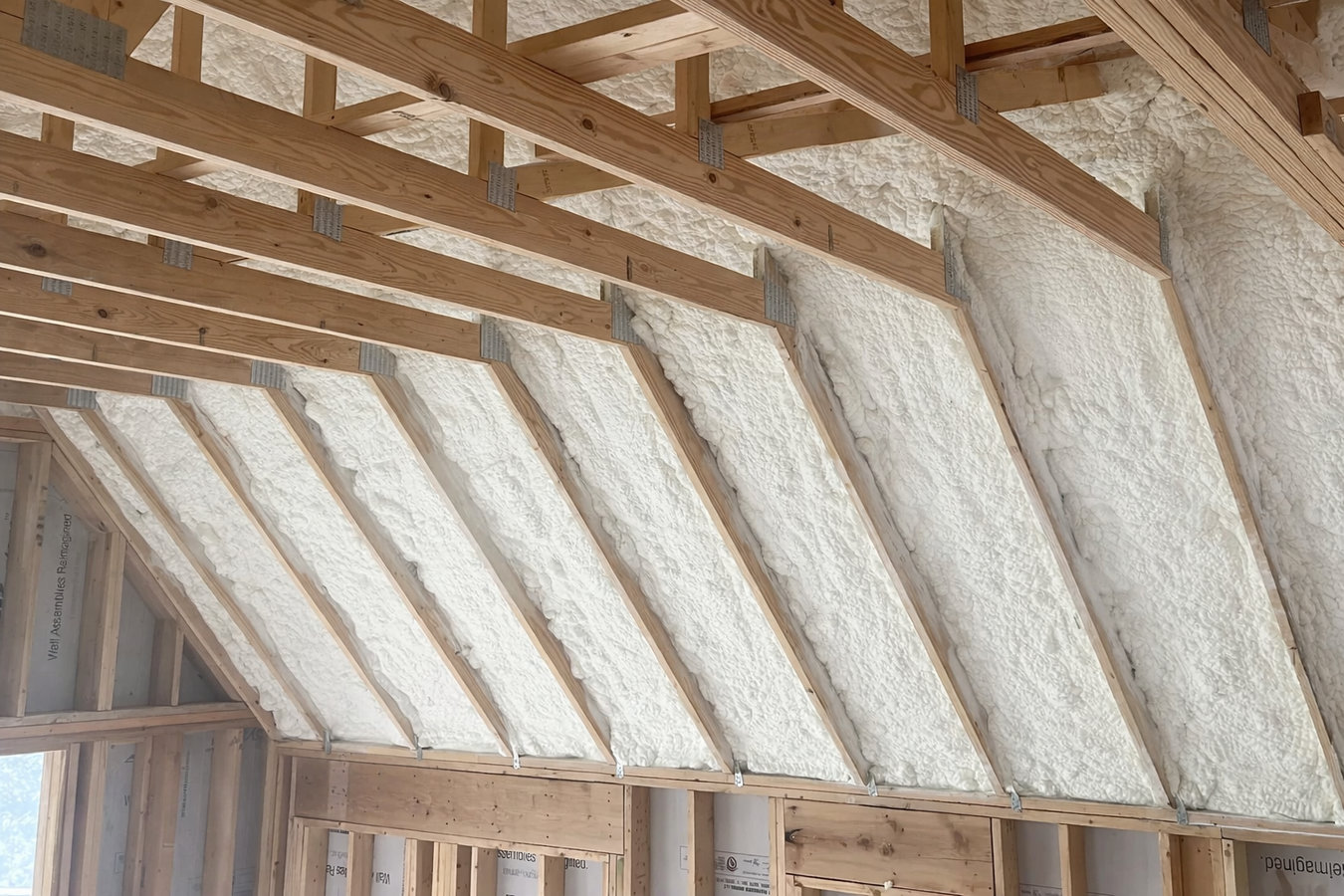
Bismarck winters demand more from insulation than most materials can deliver. Closed-cell foam seals every gap and achieves the highest R-value per inch available - so cold air stays out and your heat stays in all winter.
Closed-cell foam insulation in Bismarck is sprayed as a two-part liquid that expands and hardens into a rigid, dense layer - it insulates, seals air gaps, and resists moisture in a single application. Most crawl space and rim joist jobs are completed in one day; larger attic or full-basement projects typically take two days.
What makes closed-cell foam different from fiberglass or cellulose is that it acts as both insulation and an air barrier at the same time. In a home where heat is escaping through gaps around joists, sill plates, and foundation framing - not just through the wall material itself - filling those gaps is as important as the R-value. Bismarck homes built in established neighborhoods before the 1980s, including areas like Northridge, Hillcrest, and older south-side streets, were constructed when insulation standards were far lower than today and when no one thought much about sealing the rim joist. Those homes are among the strongest candidates for this material.
Closed-cell foam is frequently used alongside a broader insulation plan. It is the preferred material for rim joist work when we pair it with open-cell foam insulation in the attic or wall cavities, or when we combine it with full spray foam insulation for a whole-home upgrade. Both pairings are common in Bismarck homes where the goal is addressing the full thermal envelope, not just one weak spot.
If your natural gas bill jumps sharply each October and stays high through March or April, your home is losing heat faster than it should. Bismarck winters are long and cold enough that even moderate insulation gaps translate into hundreds of dollars in extra heating costs each season. If bills have been creeping up year over year without a change in your habits, under-insulation or air leaks are a likely cause.
Stand near an exterior wall or crouch near the floor in your basement or crawl space on a cold January day. If you feel a noticeable draft or the surface feels significantly colder than the rest of the room, air is getting in somewhere. In Bismarck homes built before the 1990s, the most common entry points are the rim joist and gaps around pipes or wires passing through exterior walls - both ideal candidates for closed-cell foam.
If you have noticed condensation on pipes, damp insulation, or a persistent musty odor in your lower level, moisture is finding its way in. Bismarck's freeze-thaw cycles can open small cracks in foundation walls over time, and once moisture gets in it can sit against wood framing and create conditions for mold. Closed-cell foam applied to crawl space walls and the rim joist area addresses both the air leak and the moisture problem at the same time.
If one part of your home always feels colder in winter no matter how high you set the thermostat, that is a localized insulation problem. Attics and the ceilings above garages are two of the most common weak spots in Bismarck homes - exposed to the full force of the cold and often the last areas to get attention. Closed-cell foam in these areas can make a dramatic difference in how evenly your home holds heat.
We apply closed-cell foam in the spaces where its combination of high R-value, air sealing, and moisture resistance matters most - crawl space walls, rim joists, basement walls, roof decks, and above-garage ceilings. Before any foam goes in, we assess the space for existing moisture damage or structural issues, because applying foam over a wet or rotting surface creates a more expensive problem than the one you started with. We also check surface temperatures before spraying, since the foam needs to be within a specific range to cure properly - a step that matters in Bismarck's cold shoulder seasons.
For homeowners who want the highest R-value per inch but have a budget more suited to one specific zone rather than the whole home, we can pair closed-cell foam at the rim joist with open-cell foam insulation in attic or wall cavities - open-cell provides excellent sound dampening and thermal performance at a lower cost per square foot where moisture resistance is less critical. For a comprehensive whole-home approach, full spray foam insulation covers all zones in one project with a single crew visit.
Best for homes with moisture history or severe cold-air infiltration from below - seals and insulates in one application with no ongoing maintenance.
Suited for homes converting to a conditioned attic or addressing cold upper floors - foam sprayed to the underside of the roof deck creates an unvented assembly.
Ideal for finished or partially finished basements where wall space is limited - delivers high R-value in a thinner layer than batt insulation would require.
For homeowners with a room above the garage that is always the coldest in the house - closed-cell foam in the ceiling cavity addresses both air leakage and thermal performance.
Bismarck regularly sees winter temperatures drop to -20°F or colder, and the heating season stretches from October well into April. The U.S. Environmental Protection Agency classifies spray polyurethane foam as an effective air and moisture barrier - both properties that matter more in North Dakota's freeze-thaw climate than in most other states. Bismarck sits in Climate Zone 6, one of the coldest categories in the continental United States, where the sustained temperature difference between inside and outside during winter puts pressure on every gap and thin spot in your home's shell. Cold air finds every crack - and closed-cell foam's ability to seal and insulate in one application makes it especially well-suited to this climate. Homeowners in Mandan and other nearby communities face the same conditions and frequently contact us about crawl space and rim joist work.
Many homes in established Bismarck neighborhoods - Northridge, Hillcrest, and the older south-side streets - were built in the 1950s through 1980s, when insulation standards were far lower than they are today. These homes often have under-insulated crawl spaces, rim joists that were never sealed, and attics that do not meet current recommendations for this climate zone. Bismarck's repeated freeze-thaw cycles also open up small cracks in foundation walls over time, creating pathways for both cold air and moisture. Closed-cell foam's water-resistant properties make it a particularly smart choice for those vulnerable spots, because it will not absorb the moisture that sneaks in during a thaw the way fiberglass can. Homeowners in Lincoln with similar-era homes regularly reach out to us for the same crawl space and rim joist assessment.
We ask a few basic questions - your home's age, which areas you want insulated, and whether you have had any moisture or energy issues. We reply within one business day and schedule a free in-home estimate rather than quoting over the phone, because the actual condition of your crawl space or attic matters to the final price.
We look at the spaces being insulated, check for existing insulation, and look for any moisture damage or structural issues that need to be addressed before foam goes in. You receive a written estimate with no vague line items - just a clear breakdown of what is being done, where, and what it will cost.
Before the crew arrives, clear access to the work areas and plan to be out of the home during the work and for a period after. Your contractor will give you a specific re-entry time in writing before work begins. Arrange for pets to be out of the house as well.
Most crawl space and rim joist jobs are done in a single day. The crew applies the foam in controlled passes and cleans up before leaving. We walk you through the finished work, show you what was done, and answer any questions before we leave your property.
Free in-home estimate, written quote, no pressure. We reply within one business day.
(701) 299-5341Closed-cell foam must be applied within a specific temperature range to cure correctly. We verify surface temperatures before starting - which matters in Bismarck's cold shoulder seasons when a cold crawl space can be below the threshold. A batch applied outside that range underperforms and you would never know without testing.
We inspect the installation area for signs of water intrusion before recommending a product. Sealing a wet or rotting surface with foam locks the problem in place and makes it far more expensive to fix later. In a climate where freeze-thaw cycles regularly open cracks in foundations, this step is non-negotiable for responsible work.
We cover Bismarck, Mandan, Lincoln, Washburn, and communities extending to Williston and Aberdeen - all 12 service areas on our list. You get a contractor who already knows the housing conditions and climate challenges specific to your part of North Dakota.
Your family's safety during re-entry is not a verbal estimate. We give you a specific time in writing before the crew begins so you can plan your day without guessing. For households with children or pets, we will tell you plainly whether waiting until the next morning is the right call.
Closed-cell foam is one of the most effective insulation products available - but only when it is applied correctly by someone who understands the material and the climate it is performing in. When you call us, you get a contractor who knows both. The Spray Polyurethane Foam Alliance provides homeowner resources on what to look for in a qualified installer if you want an independent reference point.
A lower-cost foam option well-suited for attic cavities and interior walls where moisture resistance is less critical but thermal performance still matters.
Learn more →Whole-home spray foam upgrades covering attics, crawl spaces, walls, and rim joists in a single project for maximum combined performance.
Learn more →Installation slots fill up fast once Bismarck temperatures start dropping in October. Reach out today and lock in your date before the fall rush.