
Loading…
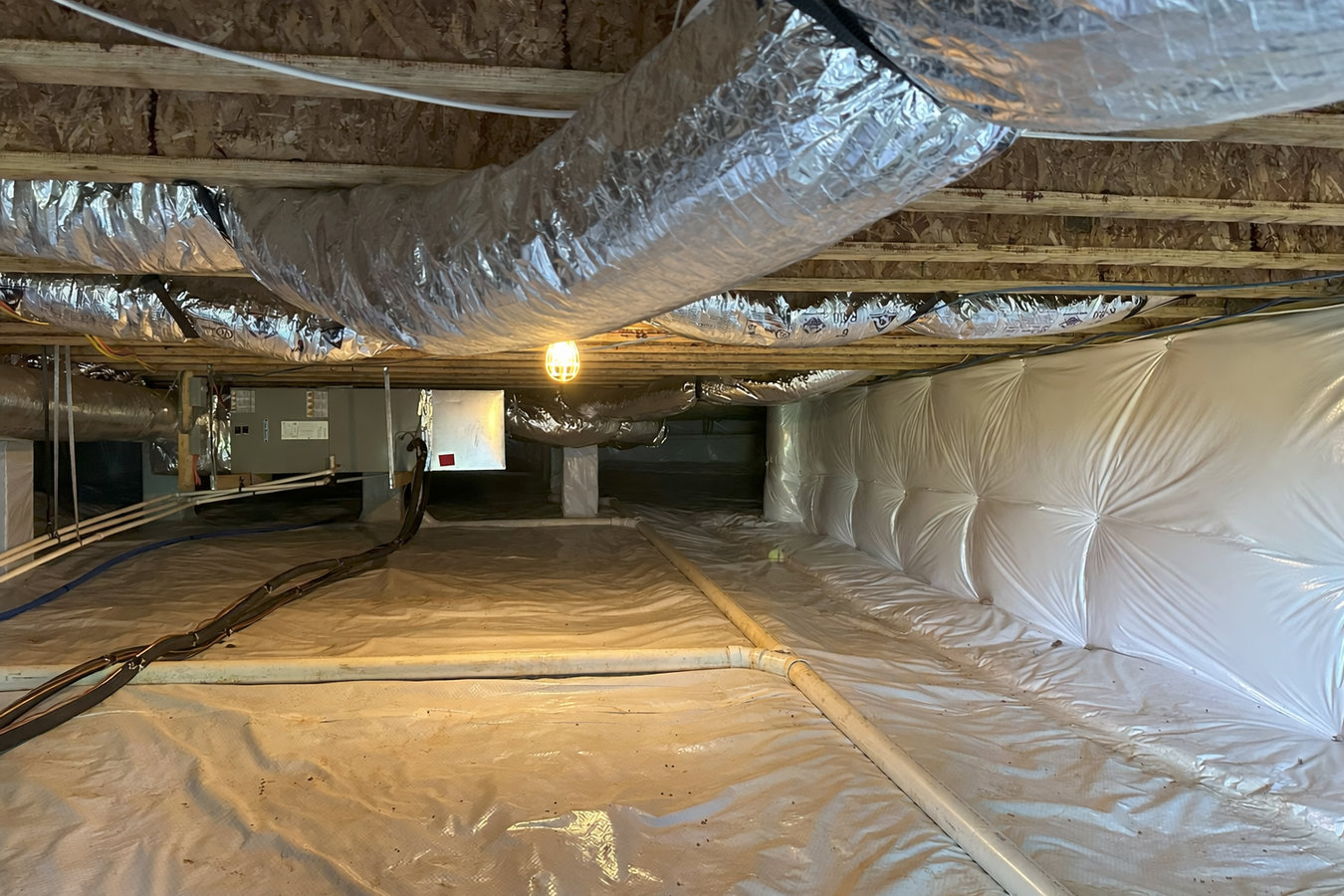
Cold floors and high heating bills often start under your home. Proper crawl space insulation cuts the cold air pathway from below, so your furnace does not have to fight for every degree on a January morning in Bismarck.
Crawl space insulation in Bismarck acts as a thermal barrier between the cold ground and your home's floor - most jobs are completed in one to two days, the work happens entirely below your living space, and you do not need to move furniture or vacate any rooms while the crew is on site.
Without it, cold air and ground moisture move upward through the floor, making your home harder to heat and your floors uncomfortable to walk on in winter. Bismarck sits in one of the coldest climate zones in the continental United States, and homes built here before the 1980s were often constructed before modern energy codes required meaningful crawl space insulation. Many of those homes have original fiberglass batts that have sagged, gotten wet, or been disturbed by pests over the decades. Crawl space insulation is one of the highest-return fixes available for a Bismarck home with cold floors and high utility bills.
Moisture control is closely connected to crawl space insulation. Pairing the insulation work with a crawl space vapor barrier is the combination that keeps moisture from undercutting the insulation's performance year after year.
If you walk across your kitchen or living room floor in winter and it feels noticeably cold through your socks, that is a strong sign heat is escaping through the floor into the crawl space below. In Bismarck, where temperatures regularly drop well below zero, an uninsulated or under-insulated crawl space can make the floor above feel like a cold slab regardless of how high you set the thermostat.
If your gas or electric bills have been rising over the past few winters and nothing obvious has changed, heat loss through the crawl space is one of the first places to look. Bismarck homeowners heating through long, brutal winters feel this in their utility bills more acutely than most, and crawl space insulation is one of the highest-return fixes available.
A persistent musty or earthy smell coming from lower in the house - especially in rooms above the crawl space - often signals moisture buildup below. Bismarck's freeze-thaw cycles can push moisture into crawl spaces each spring. If there is no vapor barrier or the existing insulation is holding that moisture, it can start to smell and eventually lead to mold.
Homes built in Bismarck before modern energy codes were adopted were often insulated to a much lower standard than what is recommended today - or not insulated at all in the crawl space. If you have lived in your home for years and cannot recall anyone ever working in the crawl space, there is a reasonable chance the insulation there is either minimal, damaged, or missing entirely.
We install crawl space insulation using spray foam, rigid foam board, and fiberglass batt systems depending on whether your crawl space is vented or sealed and what moisture conditions we find during the assessment. Every job includes air sealing around pipes, wiring, and the rim joist before insulation is installed - skipping that step is the most common reason homeowners do not see the heating bill savings they expected. For crawl spaces where old damaged material needs to come out first, we connect removal and reinstallation so the project moves forward without two separate crews and two separate schedules.
We also coordinate crawl space insulation with wall insulation when homeowners want to address the full envelope in one project. Combining crawl space and wall work in a single visit reduces disruption and often makes the most sense for older Bismarck homes where both areas are under-performing. After installation, we walk you through what was done and leave you with documentation of the materials used - useful for tax credits, utility rebate applications, and future home sales. For moisture-driven crawl space problems, a crawl space vapor barrier is typically included as part of the same project scope.
Best for vented crawl spaces where insulating the underside of the floor is the standard approach - good fit for most older Bismarck ranch and split-level homes.
Suited for sealed or encapsulated crawl spaces where insulating the perimeter walls rather than the floor above creates a more effective thermal boundary.
Ideal for homes with significant air infiltration from below - spray foam seals and insulates in one pass, which matters in Bismarck's wind-driven cold.
Addresses the single most common air leak in crawl spaces - the gap between the foundation wall and the floor framing - before any other insulation goes in.
Bismarck sits in one of the coldest climate zones in the lower 48 states, with average January lows regularly dropping below 0 degrees F and wind chills that push temperatures far colder. The U.S. Department of Energy publishes recommended insulation levels by climate zone, and Bismarck falls into a category that calls for substantially more insulation than most of the country - including the crawl space. Many homes in Bismarck's older neighborhoods were constructed before those standards existed, and a large share have crawl space insulation that has sagged, compressed, or degraded over 40 to 60 years of exposure. The ENERGY STAR recommended R-values by climate zone give a clear picture of just how much Bismarck homes need compared to what most older construction provides.
Bismarck's dramatic temperature swings - from deep freezes to spring thaws - cause the ground to heave and settle repeatedly each year, which can allow moisture into the crawl space and damage insulation over time. Homeowners in Mandan and Lincoln face the same freeze-thaw challenges and similar housing-stock age profiles. In all of these communities, air sealing matters as much as the insulation itself - the northern Plains are known for persistent wind, and Bismarck is no exception. Wind-driven cold air can infiltrate a crawl space through vents, gaps around pipes, and unsealed rim joists far more aggressively than in calmer climates.
We ask a few basic questions - the age of your home, whether you have had any moisture issues, and what is prompting the call. We respond within one business day and schedule an in-person assessment at no cost. We do not quote over the phone, because crawl spaces vary too much for that to be reliable.
A contractor accesses your crawl space through the hatch or an exterior vent opening. We check the current insulation, look for moisture or mold, measure the space, and note anything that needs to be addressed before new material goes in. This visit typically takes 30 to 60 minutes.
After the assessment you receive a written estimate explaining what work is recommended, what materials will be used, and the total cost. If moisture remediation or air sealing is included, it is itemized separately so you understand what you are paying for.
The crew works entirely in the crawl space - you will hear some noise from below but your living space is not disrupted. Most jobs finish in one day. Before leaving, the contractor walks you through what was done and leaves documentation of the materials installed.
Free estimate, no obligation. We assess your crawl space in person and tell you exactly what it needs before any work begins. Response within one business day.
(701) 299-5341We have been working in Bismarck and the surrounding region since 2024, handling crawl space jobs in homes from 1950s ranch houses near downtown to newer builds on the south side. Local experience means we know what Bismarck homes actually need under the floor.
We check for standing water, condensation, and damp soil as part of every crawl space assessment. Installing insulation over a moisture problem is one of the most common mistakes in this work - it leads to early failure and callbacks. We address what we find before anything else.
Bismarck falls in one of the most demanding insulation climate zones in the country. We recommend insulation levels calibrated for North Dakota winters specifically - not the generic cold-climate standard that a contractor from a milder region might apply.
The Insulation Contractors Association of America recognizes air sealing as a critical part of any crawl space project. We seal rim joists, pipe penetrations, and framing gaps in the same visit as the insulation installation, so you are not paying for a job that leaves half the air infiltration problem unsolved.
Every crawl space job ends with a walkthrough and written documentation of what was installed - useful for utility rebate applications, federal tax credit paperwork, and future home sales. That combination of local climate knowledge, moisture-first thinking, and documented work is what makes the difference in a Bismarck winter.
Combine crawl space work with wall insulation to address the full lower envelope of your home in a single project.
Learn more →A vapor barrier installed alongside insulation keeps moisture from migrating up from the soil and shortening the life of your new insulation.
Learn more →Appointment slots fill fast in September and October - contact us now to lock in your date and stop cold floors and high heating bills before the season begins.