
Loading…
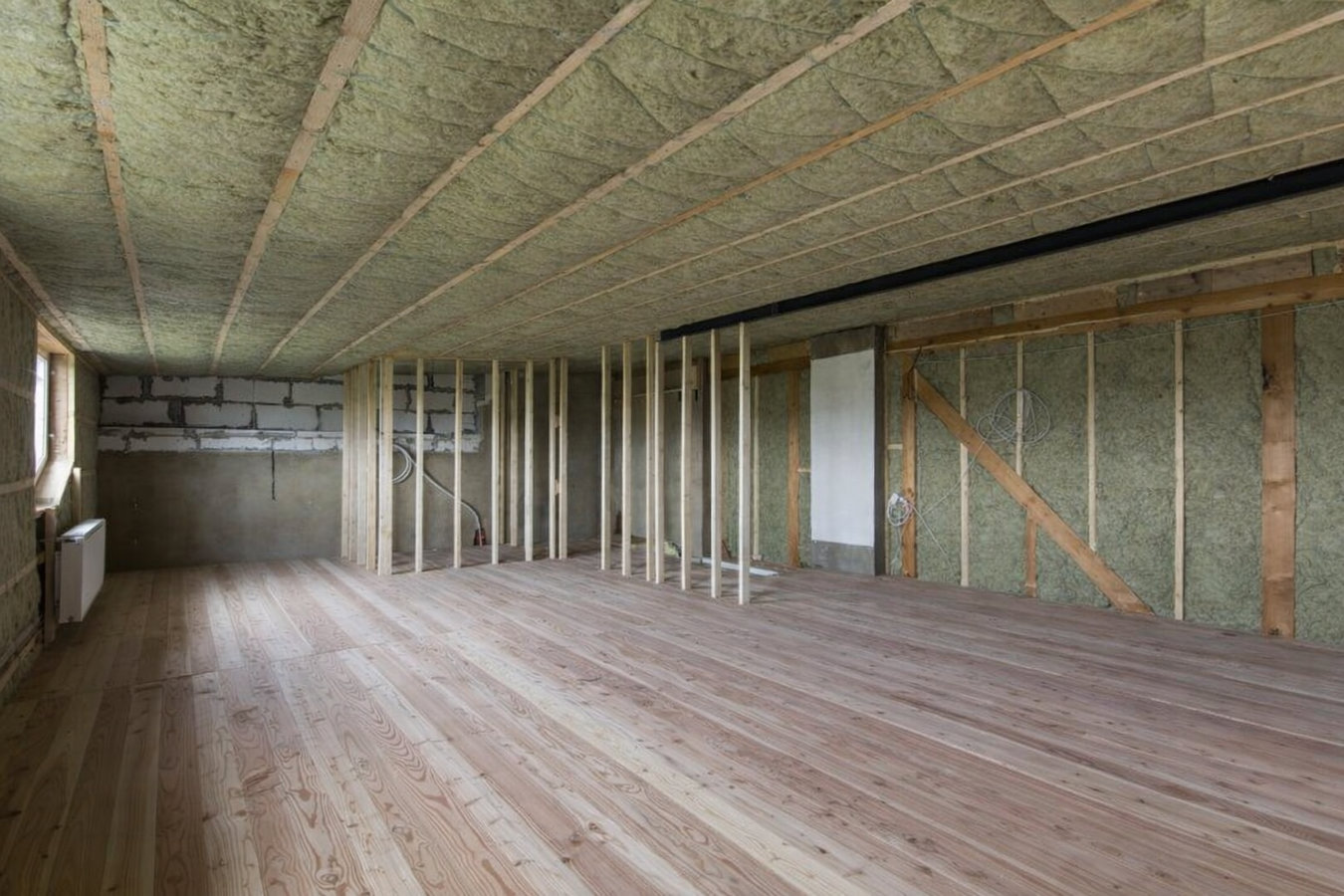
Cold floors, high heating bills, and drafts near the basement walls are all signs your foundation is costing you every winter. We seal the rim joist and insulate the walls so heat stays where you paid to put it.
Basement insulation in Bismarck creates a barrier along your foundation walls and rim joist area that slows heat from escaping into the frozen ground outside - most jobs are completed in one to two days for an average home, with the crew working around the perimeter while you continue using the rest of your house.
Your basement is one of the biggest sources of heat loss in any home that does not have proper foundation insulation. In Bismarck, where the heating season runs from October into April and average January lows hover around -5°F, an uninsulated basement means your furnace is fighting the frozen ground on every side, every night for six months. Older homes in established Bismarck neighborhoods - particularly those built before the 1980s near downtown and the north side - were constructed before modern insulation requirements existed and are among the most common candidates for this work.
Basement insulation works best alongside other improvements to your home's thermal envelope. If moisture is also a concern in your lower level, pairing insulation with crawl space insulation addresses the full picture, and combining it with closed-cell foam insulation at the rim joist delivers the most complete air and moisture seal available for a North Dakota foundation.
If your gas bill jumps sharply when cold weather arrives and stays elevated through March or April, your basement is likely one of the biggest sources of heat loss. In Bismarck's climate, an uninsulated or under-insulated basement can account for a significant share of your total heating cost because the temperature gap between your warm interior and the frozen ground is extreme for so many consecutive months.
If you walk across your kitchen or living room floor in socks and the floor feels noticeably cold even with the heat running, heat is escaping through the basement ceiling rather than staying in your living space. This is especially common in Bismarck homes built before the 1980s, where the floor framing was left uninsulated. It is one of the most direct signs that basement insulation would make a real difference in daily comfort.
Stand near the top of your basement walls in winter and hold your hand where the wall meets the floor framing above. If you feel a draft or cold air moving, the rim joist area is not properly sealed or insulated. This is one of the most common air leakage points in older Bismarck homes and one of the most cost-effective places to address, because sealing it also reduces moisture entry.
Frost forming on the inside of your basement walls during deep cold snaps, or condensation appearing during spring thaw, signals that the wall surface is not insulated well enough. Left unaddressed, this moisture cycle can lead to mold growth and deterioration of any items stored below. White mineral deposits - a chalky residue - on your concrete walls also indicate that water has been moving through the wall over time.
The most effective approach for most Bismarck homes is insulating the foundation walls and sealing the rim joist rather than insulating the basement ceiling. Wall insulation keeps the entire lower level warmer, makes the living space above more comfortable, and reduces the pressure on your heating system through the long North Dakota winter. We check for moisture and air leaks before recommending any product, because trapping water behind insulation is more expensive to fix than skipping the step entirely. For homes with a history of seasonal seepage, we will tell you plainly what needs to be addressed first.
The rim joist - the framing that sits on top of your foundation wall - is the single most common cold-air entry point in older Bismarck homes. We seal it using closed-cell foam insulation, which expands to fill every gap and adds a moisture barrier in the same step. For homeowners whose under-floor space is a crawl space rather than a full basement, we offer crawl space insulation using the same rim joist and wall approach scaled for that space.
Best for homeowners using their basement as living space - keeps the whole lower level warmer and reduces heat loss through the concrete perimeter.
Suited for any Bismarck home with a framed floor over a basement - addresses the most common cold-air entry point with spray foam that seals and insulates in one application.
A practical option when the basement is unheated storage - insulates the floor above to keep living areas warm without conditioning the lower level.
For homeowners who want comprehensive coverage - combines wall insulation, rim joist sealing, and ceiling work for maximum performance in a single visit.
Bismarck sits in one of the coldest climate zones in the continental United States, with average January lows near -5°F and a heating season that stretches from October into April. The U.S. Department of Energy recommends basement wall insulation in the R-15 to R-19 range for homes in this climate zone - a significantly higher bar than what is required in warmer states. North Dakota's frost depth reaches roughly 60 inches in the Bismarck area, one of the deepest in the country, which means the soil around your foundation goes through significant freeze-thaw cycles every year. That movement can open small cracks over time, and those cracks become pathways for both cold air and moisture - which is why contractors here always inspect the foundation before any insulation goes in. Homeowners in Mandan and across the surrounding region face the same conditions and frequently contact us for the same work.
A significant share of Bismarck's housing stock was built between the 1940s and 1980s, before modern insulation codes were established. Older neighborhoods near downtown, the north side, and areas close to Bismarck State College routinely have little or no basement insulation and rim joists that have never been sealed. For these homes, basement insulation is not a minor upgrade - it is often the single change that makes the biggest difference in comfort and heating costs. Homeowners in Lincoln and other nearby communities with similar-era housing stock reach out to us regularly for the same assessment. The good news is that older homes frequently see the largest comfort improvements after insulation work, because there is so much room to gain.
We will ask a few basic questions - your basement size, whether it is finished or unfinished, and whether you have had any water issues. We reply within one business day and most Bismarck homeowners can get a visit scheduled within a few days to a week.
We walk through your basement, check the rim joist area, and look for any signs of moisture or air leaks before recommending an approach. You receive a written estimate spelling out the type of insulation, the areas being covered, and the total cost - no surprise charges.
If your project requires a City of Bismarck building permit - common when spray foam is used - we pull it on your behalf. You do not need to contact the city yourself. A permitted job means a city inspector verifies the work, which protects you at resale.
Most jobs take one full day. You clear items from the walls before we arrive, and we handle everything else. When the work is done, we walk you through what was installed, where, and what to watch for - and we leave the space clean.
Free estimate, written quote, no pressure. We reply within one business day.
(701) 299-5341From Bismarck proper to Mandan, Lincoln, Washburn, and communities as far as Williston and Aberdeen - we serve every area on our list and know the housing conditions in each one. You are not calling a distant crew with no local knowledge.
We inspect your foundation for water intrusion signs before any material goes in. Trapping moisture behind insulation causes mold and structural damage far more costly than the original project. No reputable contractor skips this step in a North Dakota spring-thaw climate.
When your project requires a City of Bismarck building permit - and spray foam jobs frequently do - we handle the paperwork. A permitted job means an independent city inspector verifies the work before it is closed in, protecting you if you ever sell.
The rim joist is the most common cold-air entry point in Bismarck homes, yet many contractors skip it to reduce bid prices. We include it as a standard part of basement insulation work because leaving it open means the rest of the job underperforms.
Every one of those points matters in practice, not just on paper. When you call us, you get a contractor who already knows what a Bismarck basement looks like in February, what the city inspector wants to see, and what the most common failure points are in homes built in this region.
The highest R-value-per-inch material available - ideal for rim joist sealing and basement wall applications where space is limited.
Learn more →The same wall and rim joist insulation approach applied to crawl space foundations - keeps the floor above warmer and reduces moisture entry.
Learn more →Bismarck contractors fill up fast in September - locking in your date now means you are warm before the first cold snap, not scrambling in November.