
Loading…
Insulation slows heat loss, but gaps and cracks let cold air straight in. Air sealing finds and closes every opening in your home's outer shell so your furnace is not fighting the outdoors every January night.
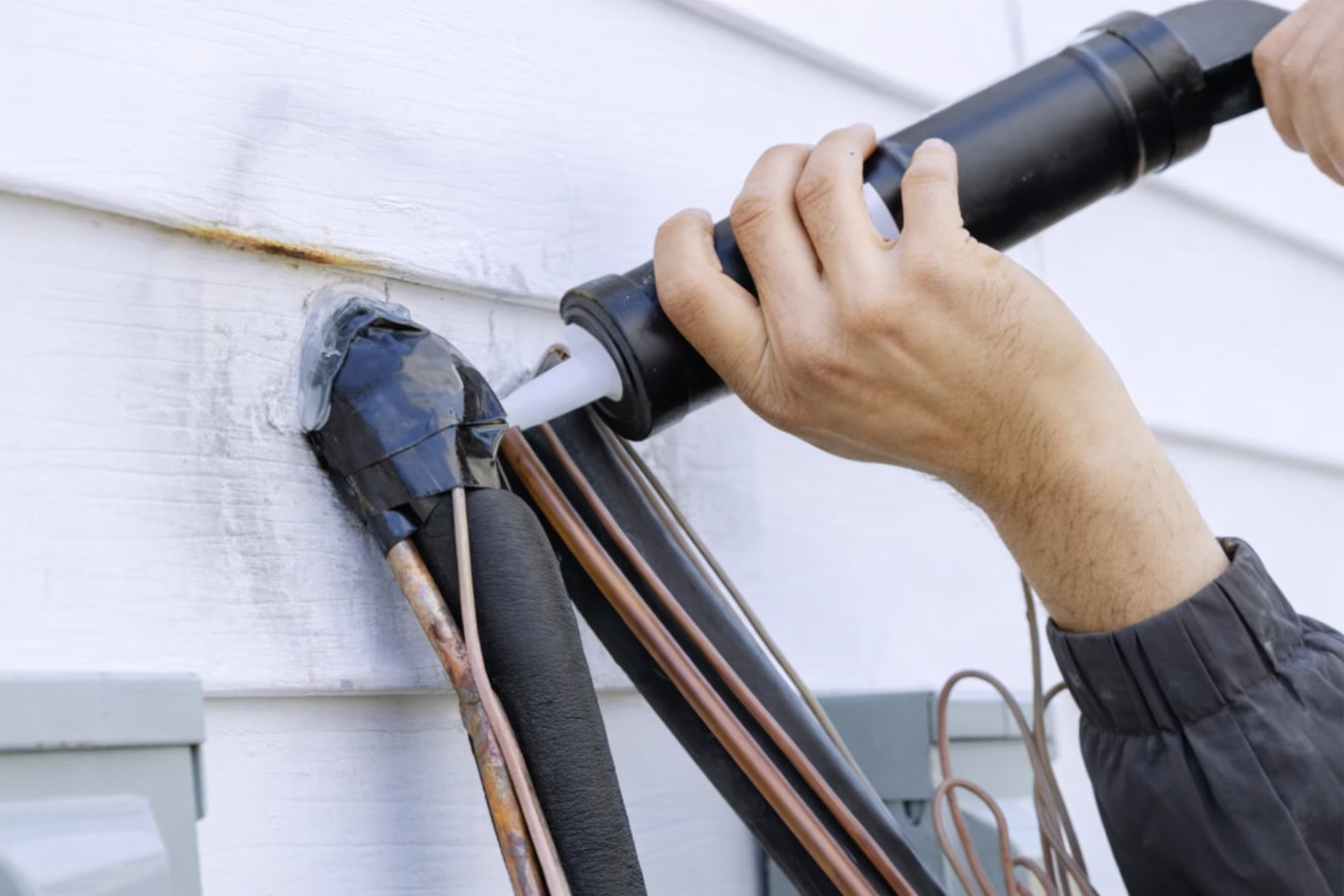
Air sealing in Bismarck means finding every gap, crack, and opening in your home's outer shell - around pipes, wires, light fixtures, attic hatches, and wall joints - and closing them so outside air cannot sneak in and your heated air cannot escape. Most jobs are completed in one to two days, the work happens mostly in spaces you do not use daily, and you can stay in your home throughout.
The average American home leaks enough air through cracks and openings that it is like leaving a window open year-round. In Bismarck, where the heating season stretches from October through April and temperatures regularly drop well below zero, that leakage adds up to serious money every month. Homes built in Bismarck's established neighborhoods before the 1980s were constructed before modern air sealing standards existed - and many have never been addressed since.
Air sealing and insulation work best together. If your home has gaps AND thin walls, pairing air sealing with basement insulation or attic air sealing addresses the full picture rather than solving half the problem.
If your gas or electric bill has been creeping up year after year and you have not added square footage or changed your habits, air leakage is one of the most common culprits. Bismarck's long heating season means even small leaks compound into significant costs over a winter. If your bills feel out of proportion to what neighbors pay for similar-sized homes, that is worth investigating.
Run your hand along the baseboards on an exterior wall on a cold January day. If you feel cool air moving, that air is coming from outside through gaps in the framing. Electrical outlets on exterior walls are another tell - if the cover plate feels cold or you can feel air movement near it, there are gaps behind the wall that need to be sealed.
If a bedroom or the room above the garage is always colder than the rest of the house, the thermal boundary in that area likely has gaps. These cold spots do not respond to turning up the thermostat because insulation is not the issue - air movement is. No amount of heat will fix a room that is exchanging air with the outdoors through hidden gaps.
In a cold climate like Bismarck's, warm moist air from your living space can sneak into the attic through gaps around light fixtures, attic hatches, and ceiling penetrations. When that warm air hits the cold attic, it deposits moisture as frost on the roof sheathing. If you have ever seen frost in your attic in January, warm air is escaping through the ceiling and the gaps need to be sealed before that moisture causes structural damage.
We begin every air sealing job with a blower door test - a fan mounted in your front doorway that depressurizes the house and lets us see exactly where air is moving in. That diagnostic step means we target the gaps that actually matter for your home's comfort and energy bills, not just the obvious or easy-to-reach spots. Common areas we address include the attic floor, basement rim joists, gaps around pipes and wires passing through walls, and any penetrations in the ceiling below the attic. We seal those gaps using spray foam for larger openings and caulk or weatherstripping for smaller ones, then run the blower door test again at the end to confirm the leakage rate actually dropped.
For homes where air leakage in the attic is a particular concern, we offer dedicated attic air sealing that works alongside attic insulation upgrades to close the ceiling plane before new insulation is installed. We also pair full-home air sealing with basement insulation when homeowners want to address the rim joist and basement walls in the same visit, which is the most common configuration for older Bismarck homes that have both problems.
Best for homeowners who want to address all leakage points at once - starts and ends with a blower door measurement so you can see the before-and-after difference.
Suited for homes losing heat through ceiling penetrations into the attic - seals the ceiling plane before insulation goes in for maximum combined performance.
Addresses the most common air leak in older homes - the gap between the foundation wall and the floor framing that lets cold basement air into living spaces.
Ideal for homes where cold ground-level air is entering through gaps around pipes, ducts, and framing below the living floor.
Bismarck's heating season runs from October through April, and winter temperatures regularly drop well below zero. The North Dakota State Climate Office notes that Bismarck sits in one of the coldest regions in the continental United States, and the Northern Plains' open terrain means wind pushes cold air through gaps in your home's shell far more aggressively than in sheltered cities. A crack that causes a minor draft in a calmer climate can create a serious cold spot in a Bismarck home on a January night when northwest winds are blowing. Homes near the Capitol grounds and along the Missouri River bluffs - a large share of Bismarck's older housing stock - were built before modern energy codes required tight construction, and many have never been air sealed. Homeowners in Mandan and Washburn with similar older housing stock see the same payback pattern when they address air sealing.
Financial help is also available in North Dakota that reduces how much air sealing costs out of pocket. The North Dakota Housing Finance Agency runs a weatherization assistance program that can cover air sealing and insulation for income-qualifying homeowners. Federal tax credits are also currently available for qualifying air sealing work. Neither of those options requires you to do anything complicated - just ask your contractor before the job starts, not after.
We ask a few quick questions - your home's age, rough square footage, and what has been prompting your concern. You will hear back within one business day, and most Bismarck homeowners can schedule an in-home assessment within a week or two. Early fall appointments book quickly before the heating season begins.
A contractor arrives and sets up a blower door - a fan that fits in your front doorway and measures how much air your home is leaking. This test takes about an hour and produces a clear map of where the biggest problems are. You get a written estimate that explains what will be sealed, where, and why - before any work is scheduled.
Most of the work happens in your attic, basement, and crawl space - areas you rarely use. The crew seals gaps using foam and caulk, working from the attic floor down to the rim joists. The work is not loud or disruptive, and you can go about your normal day. Spray foam has a mild odor for a few hours while curing.
A thorough contractor runs the blower door test again when the work is done and shares the before-and-after numbers with you. You receive written documentation of what was sealed - useful for utility rebate applications and federal tax credit filings. Most homeowners notice the difference in comfort within the first few days.
Free estimate, no pressure. We test your home, show you exactly where the leaks are, and give you a written quote before any work begins.
(701) 299-5341We measure your home's air leakage at the start of every job and again when the work is done. That before-and-after number tells you whether the work made a measurable difference - not just whether foam was applied. Most contractors skip the post-test. We include it on every air sealing project.
We have completed air sealing projects on homes throughout Bismarck - from older ranch homes in the established north-side neighborhoods to split-levels on the south end of town. Experience with the local housing stock means we know where the gaps are most likely to be hiding in a Bismarck home built in a specific decade.
The North Dakota Housing Finance Agency's weatherization program and utility rebate programs both require specific steps in the right order before work starts. We know those requirements and make sure your project qualifies from the first conversation - not after you have already signed a contract.
Sealing a home too tight without planned ventilation is a real risk. We assess your home's existing ventilation as part of every air sealing project and let you know if any adjustments are needed - so the work improves your air quality, not the other way around. The
Every air sealing project we do starts with a real measurement and ends with proof the work made a difference. That is the standard we hold every job to across Bismarck.
Insulate your basement walls and rim joists to stop cold air from entering at the foundation and cut heat loss from below.
Learn more →Close every gap in your ceiling plane before attic insulation goes in, stopping warm air from escaping into the cold attic above.
Learn more →Bismarck's heating season is long - seal your home before the cold hits and start saving from the first cold snap.